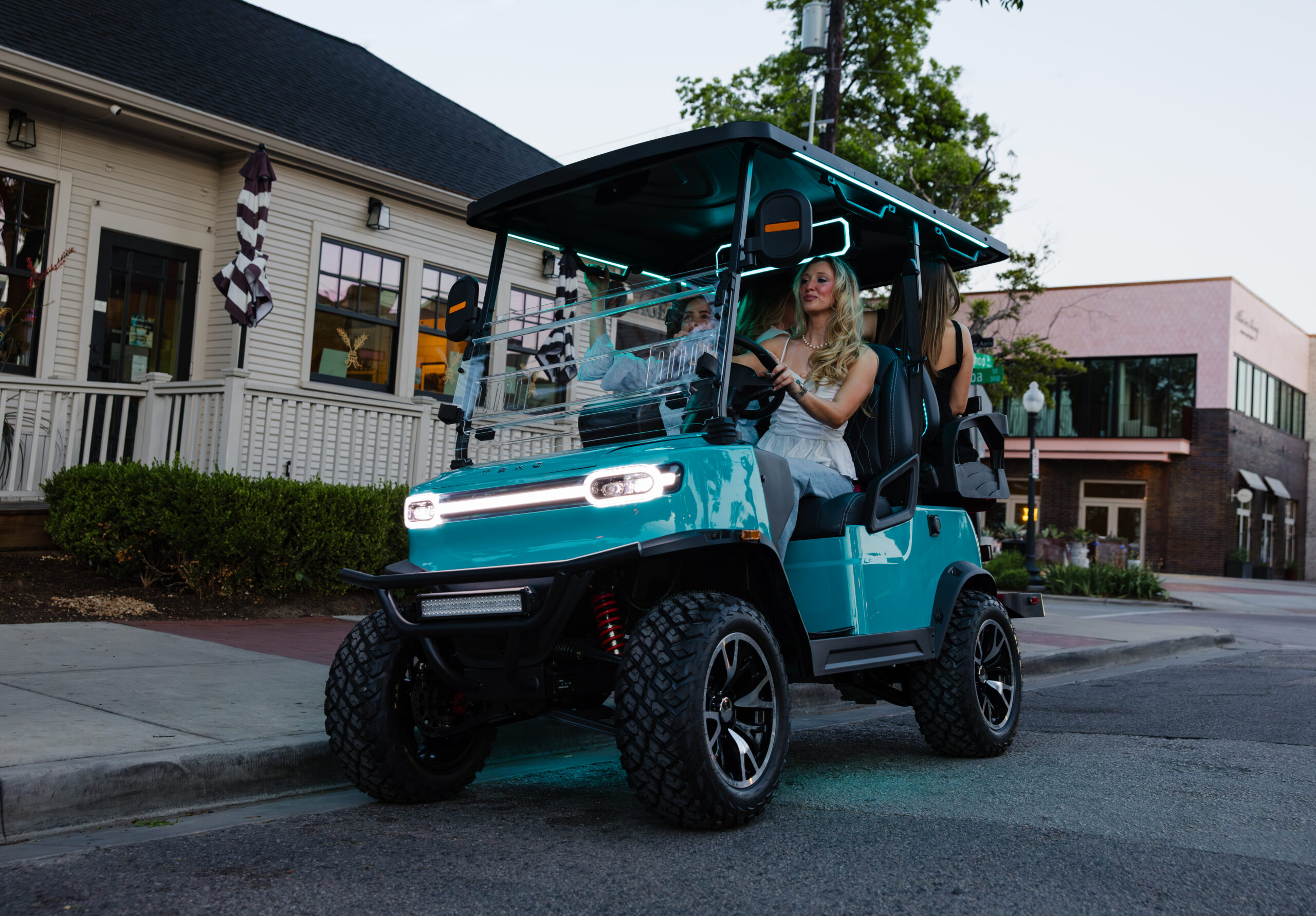
Florida Golf Cart Laws Explained: What You Can (and Can’t) Do on Public Roads
If you live anywhere along Florida’s Gulf Coast, you’ve probably shared the road with a golf cart at some point — maybe even wondered whether the one you saw cruising past the mailbox was actually allowed to be there. The short answer is: it depends on the road, the cart, and a little bit of paperwork. Here’s what Florida law actually says.
Golf Cart vs. Low-Speed Vehicle (LSV): Know the Difference First
Florida treats these as two different categories, and the rules change significantly depending on which one you own.
A standard golf cart is defined as a vehicle designed to carry people on a golf course, topping out around 20 mph. It is not registered, titled, or insured the way a car is.
A low-speed vehicle (LSV) is a step up — a four-wheeled vehicle built to federal safety standards, capable of 20-25 mph, and equipped with the same basics as a car: seat belts, headlights, turn signals, mirrors, a windshield, and a VIN. Once an LSV is registered, insured, and titled, it’s treated much more like a regular motor vehicle.
That distinction determines everything else on this list.
Where a Standard Golf Cart Can Legally Drive
Under Florida Statute 316.2126, a standard golf cart can be operated on a public road only if the posted speed limit is 30 mph or less. It can also cross a road with a posted limit of up to 45 mph, but only at an intersection with an official traffic control device (a light or stop sign) — not mid-block.
Some golf carts are also permitted on sidewalks adjacent to state highways, but only if the sidewalk is at least 5 feet wide and the cart yields to pedestrians.
Whoever is driving needs a valid driver’s license, regardless of which category the vehicle falls into.
Where an LSV Can Legally Drive
This is where upgrading pays off. Once your cart is properly registered and insured as an LSV, Florida law allows it on any public road posted at 35 mph or less — a meaningfully bigger range than a standard cart, especially useful if you live somewhere your daily errands involve a couple of connector roads rather than just a single neighborhood loop.
Local Rules Still Apply
State law sets the outer boundary, but counties and municipalities can — and often do — add their own restrictions on top of it. A cart that’s perfectly legal under state law can still run into trouble if your town’s ordinance is stricter, or if your HOA has its own rules about carts on community streets. Before you assume a route is fair game, it’s worth a quick check with your local city or county clerk’s office.
What Equipment Do You Actually Need?
At minimum, expect to need headlights, tail lights, turn signals, mirrors, a horn, a windshield, seat belts, and reflectors — and for LSVs specifically, full compliance with federal motor vehicle safety standards. If your cart is missing any of this, it’s usually a straightforward retrofit rather than a reason to buy new.
Thinking About Making Your Cart Street-Legal?
This is one of the most common questions we get at Beachside Golf Cars, and it’s also one of the easiest to solve. Whether you’re starting from a standard cart and want to know what an LSV conversion involves, or you’re shopping for a cart that’s already built street-legal from the factory, our team can walk you through exactly what your specific route requires — and handle the equipment and registration side so you’re not guessing.
This article is intended as a general guide, not legal advice. Golf cart and LSV laws can vary by county and city, and ordinances change — always confirm current rules with your local municipality before driving on public roads.